

Ugetsu 4K Ultra HD Blu-ray Review
DigiPack 雨月物語 Ugetsu monogatari
Score: 93
from 2 reviewers
Review Date:
In a Nutshell
The 4K UHD release of Ugetsu offers a sterling native HDR transfer and noticeable quality improvements, making it the definitive edition.
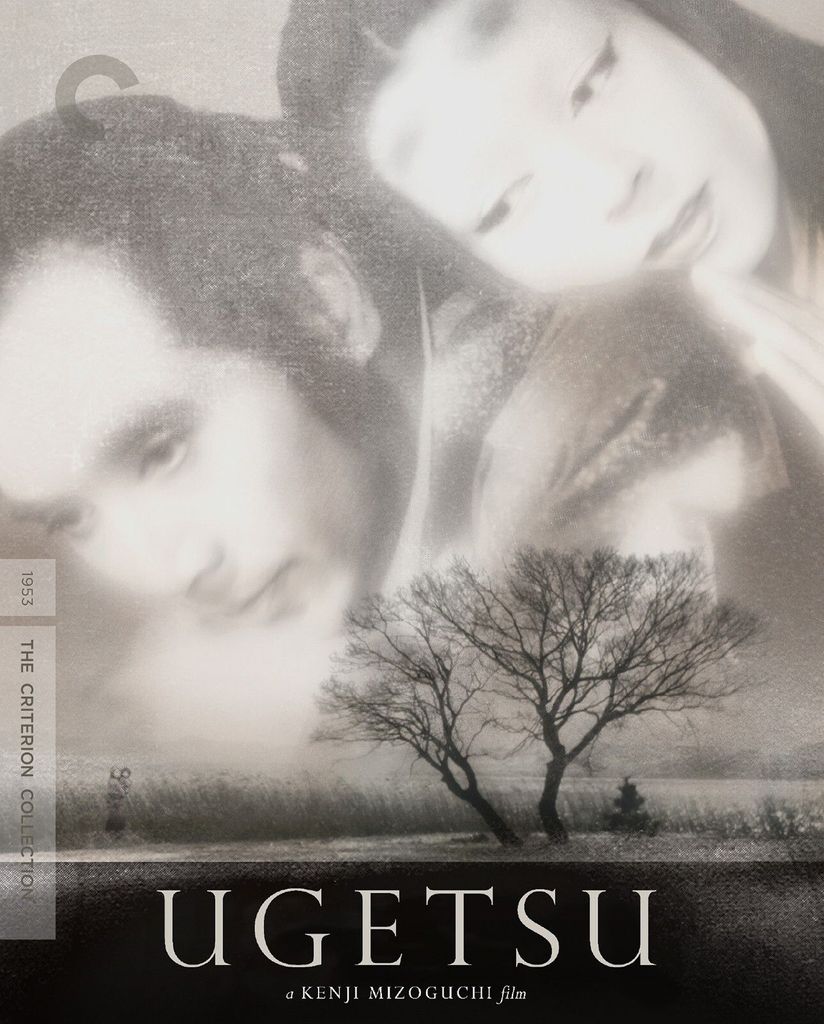
Video: 91
Criterion’s 4K UHD/Blu-ray release of Ugetsu, mastered from a 4K restoration, delivers faithful grayscale, strong film grain, and clear detail, offering substantial improvements—especially in HDR on UHD—despite minor inherited source limitations.
Audio: 91
Presented in Japanese LPCM 1.0 from a remastered 35mm optical source, Ugetsu’s audio offers faithful clarity and minimal distortion despite limited dynamic range and mid-range thinning—making this release likely the best-sounding home video edition to date.
Extra: 96
The 4K UHD Blu-ray of "Ugetsu" offers an in-depth archival commentary by Tony Rayns, a comprehensive documentary on Mizoguchi, insightful interviews with key collaborators, original trailers, and an illustrated booklet with critical essays and source stories, providing rich historical and production context.
Movie: 96
Criterion’s 4K UHD of ‘Ugetsu’ showcases Mizoguchi’s hauntingly atmospheric ghost-period drama with fluid camerawork from Kazuo Miyagawa and naturalistic performances, enhanced by comprehensive archival supplements and luminous restoration.

Video: 91
Criterion’s 4K UHD Blu-ray release of “Ugetsu” features a native 4K restoration sourced from a 2016 scan of both a 35mm fine grain positive and a duplicate negative, supervised by Masahiro Miyajima and Martin Scorsese. Presented in the original 1.37:1 aspect ratio, the 4K UHD disc showcases the film in HDR, markedly surpassing SDR presentations available on the accompanying Blu-ray. The restoration is meticulous—film grain remains intact and organic, while fine details and grayscale are rendered with notable fidelity. Surface imperfections such as scratches, dirt, and debris are minimal, preserving a clean and artifact-free visual experience.
In comparative terms, the 4K disc demonstrates clear advancements over previous Blu-ray and DVD editions, particularly in scene delineation and image depth. Source limitations persist: minor density fluctuations, image instability, and occasional inconsistency in shadow detail are evident, especially in darker sequences where blacks can fluctuate slightly. However, daylight scenes and mid-tone ranges show substantial improvements, with a richer, more convincing grayscale than any prior release. Despite inherited limitations from available elements, this is the most authentic and robust presentation of “Ugetsu” to date. The UHD edition delivers a viewing experience that meets modern archival standards and is especially recommended for those utilizing larger screens seeking the finest possible home presentation.
Audio: 91
The 4K UHD Blu-ray release of "Ugetsu" features a single audio option: the original Japanese LPCM 1.0 monaural track, accompanied by optional English subtitles. The soundtrack has been meticulously sourced from a remaster of the film’s 35mm optical print, maintaining high fidelity to the film's historical audio character.
Audio reproduction here is inherently limited by the source material’s post-war era production values, presenting a narrow dynamic range and occasional thinning in the mid-range. Dialogue, sound effects, and Fumio Hayasaka’s evocative score are delivered with notable clarity and an authentic tonal palette, showing minimal instances of hiss, crackle, or pops—previously common artifacts with older transfers. While depth and sharpness are modest, and periodic thinness can be detected, these are faithful reflections of the original mix rather than deficiencies in the lossless PCM encode. Overall, this release represents a significant technical improvement over earlier home video editions, and provides a clean, faithful representation of "Ugetsu’s" audio legacy.
Extras: 96
The extras for the 4K UHD Blu-ray of "Ugetsu" present a comprehensive and technically robust package, blending significant archival content with thoughtful interviews and supporting materials. The meticulously researched audio commentary by Tony Rayns adds scholarly depth, drawing on his extensive study of Mizoguchi’s oeuvre. Kaneto Shindo’s substantial 1975 documentary offers an in-depth exploration of Mizoguchi’s career, interwoven with interviews with collaborators and insight into his enduring legacy. Archival interviews with director Masahiro Shinoda, assistant director Tokuzo Tanaka, and cinematographer Kazuo Miyagawa provide first-hand perspectives on the film’s narrative structure, visual style, the director’s perfectionism, and the filming process. Historical trailers and a detailed booklet with essays and original stories further contextualize the film within Japanese cinema. This suite of extras demonstrates a cohesive curatorial philosophy, placing technical and artistic appreciation at the forefront.
Extras included in this disc:
- Commentary by Tony Rayns: In-depth archival audio analysis covering themes, production, and historical context.
- Kenji Mizoguchi: The Life of a Film Director: Extensive 1975 documentary profiling Mizoguchi’s career through direct interviews with key collaborators.
- Interview with Masahiro Shinoda: Renowned filmmaker discusses Ugetsu’s narrative complexity and visual innovation.
- Interview with Tokuzo Tanaka: Assistant director provides production insights and reflections on Mizoguchi's working methods.
- Interview with Kazuo Miyagawa: Esteemed cinematographer examines the photographic approach and his collaboration with Mizoguchi.
- Original Japanese Theatrical Trailer: Period trailer capturing the film’s original release context.
- Spanish-Language Trailer: Archival promotional material offering alternate-market perspective.
- Booklet: Illustrated essay by Phillip Lopate and three literary works that influenced the film’s creation.
Movie: 96
Kenji Mizoguchi’s Ugetsu (1953) stands as a defining achievement in Japanese cinema, blending the jidaigeki (period drama) and kaidan (ghost story) genres with remarkable atmospheric precision. Set during the Sengoku period’s social upheaval, the film follows potter Genjuro and his ambitious brother-in-law Tobei as their personal quests—Genjuro’s for prosperity through pottery, Tobei’s for samurai status—bring irreversible consequences for themselves and their families. The intertwined stories, drawn from Ueda Akinari’s ghost tales and elements from Guy de Maupassant, unfold in a world where reality and fantasy often bleed together.
Mizoguchi’s meticulous recreation of 16th-century Japan is matched by Kazuo Miyagawa’s cinematography, defined by long, elegant tracking shots and luminous black-and-white imagery. The camera remains fluid and inquisitive, capturing both beauty and devastation with striking clarity and contributing to the film's surreal, dreamlike tone. Performances are deeply naturalistic; Masayuki Mori, Eitarō Ozawa, Kinuyo Tanaka, Mitsuko Mito, and especially Machiko Kyo—whose portrayal of Lady Wakasa is haunting and unforgettable—anchor the film’s emotional core. The narrative is unflinching in its antiwar perspective, critiquing feudal structures as it immerses viewers in a liminal realm where ambition, love, loss, and the supernatural are inseparable. Ugetsu remains a haunting cinematic experience, celebrated for its masterful blend of technical artistry and thematic depth.
Total: 93
Kenji Mizoguchi’s "Ugetsu" receives exemplary treatment in its new 4K UHD Blu-ray release. Leveraging a comprehensive 4K restoration, this edition finally allows the film to be experienced in its native resolution with a native HDR transfer. The visual presentation is notably improved compared to previous Blu-ray editions, with increased clarity and detail particularly evident on larger displays. The black-and-white cinematography benefits significantly from enhanced dynamic range, offering deeper blacks, refined gradations, and heightened overall fidelity. Subtle textures, such as the nuances of fabric and landscape, are reproduced with increased precision, making the haunting visuals more immersive than ever.
In addition to the visual upgrade, this release retains all supplemental features from prior editions, ensuring that cinephiles have access to an extensive array of contextual and historical insights alongside the film itself. The packaging as a combo pack gives new and returning viewers flexibility in their viewing experience while maintaining archival and scholarly value. Criterion’s work here reaffirms their commitment to both cutting-edge presentation and preservation of cinematic legacy.
In summary, this 4K UHD Blu-ray edition of "Ugetsu" stands as the definitive home video presentation of Mizoguchi’s classic. The native HDR transfer and attention to visual detail mark a substantial enhancement over earlier releases. It is highly recommended for both longtime admirers of Japanese cinema and those encountering the film for the first time.
- Read review here

Blu-ray.com review by Dr. Svet Atanasov
Video: 90
If you have a large screen, you should expect to see an improvement in picture quality that is similar, often even identical, to the one the recent 4K Blu-ray release of Seven Samurai offered....
Audio: 90
Its dynamic range is limited, occasionally even somewhat lacking in some areas, like depth and sharpness....
Extras: 100
Masahiro Shinoda - presented here is an archival video interview with Japanese director Masahiro Shinoda (Funeral Parade of Roses, Pale Flower) in which he discusses Ugetsu Monogatari and its unique narrative...
Movie: 100
The film is unquestionably critical towards the feudal order which has created the monsters Genjuro, Tobei, and their wives must dodge, but also fascinated by it....
Total: 100
On my system, I saw enough small and bigger improvements in quality to declare that the best presentation of Ugetsu can be had with the combo pack....
- Read review here
Home Theater Forum review by t1g3r5fan
Video: 100
The film is presented in its original 1:37:1 aspect ratio, taken from a 4K digital restoration created in 2016 from a 35mm fine grain positive and a 35mm duplicate negative supervised by Masahiro Miyajima...
Audio: 100
Dialogue, sound mix and Fumio Hayasaka’s moody and dreamlike music score is presented faithfully with clarity, fidelity and minimal instances of crackling, popping, hissing and other instances of distortion...
Extras: 100
1992 interview with cinematographer Kazuo Miyagawa (10:32) – Originally recorded for the 1992 Criterion laserdisc, the famed cinematographer talks about the film and working for Mizoguchi....
Movie: 100
This can be attributed to two important aspects: one being Mizoguchi’s famously exacting nature in recreating the time period of the film and the other owing to cinematographer Kazuo Miyagawa; the fluid...
Total: 100
Highly acclaimed in its initial release and in the years following, Ugetsu remains one of the most spellbinding films in the career of Kenji Mizoguchi and in Japanese cinema as a whole....
Director: Kenji Mizoguchi
Actors: Masayuki Mori, Machiko Kyô, Kinuyo Tanaka
PlotIn war-torn sixteenth-century Japan, two ambitious men, Genjuro, a skilled potter, and Tobei, his brother-in-law, dream of escaping their impoverished rural lives. Despite warnings from their wives, Miyagi and Ohama, the men seize the opportunity to profit from the chaos engulfing their village by selling pottery in the city. Driven by visions of wealth and status, they drag their reluctant families into danger, venturing across a misty lake to reach the war-ravaged town. Their journey is shadowed by unease; the threat of violence and lawlessness always looms. While Genjuro is obsessed with perfecting his craft and achieving prosperity, Tobei yearns to become a samurai, desperate for respect and power.
As they chase their aspirations, Genjuro encounters an enigmatic noblewoman named Lady Wakasa at her opulent manor, while Tobei tries to exploit the turmoil for personal gain. Both men are seduced by illusions—Genjuro by Lady Wakasa’s ethereal beauty and promise of a refined life, and Tobei by the chance to don armor and acquire a title. All the while, their wives are left vulnerable and alone amid the brutality of war. The men are confronted by the consequences of their ambitions as reality drifts further from their grasp, leading both to face the true cost of their desires amid the persistent specter of conflict and loss.
Writers: Hisakazu Tsuji, Akinari Ueda, Matsutarô Kawaguchi
Runtime: 96 min
Rating: Not Rated
Country: Japan
Language: Japanese